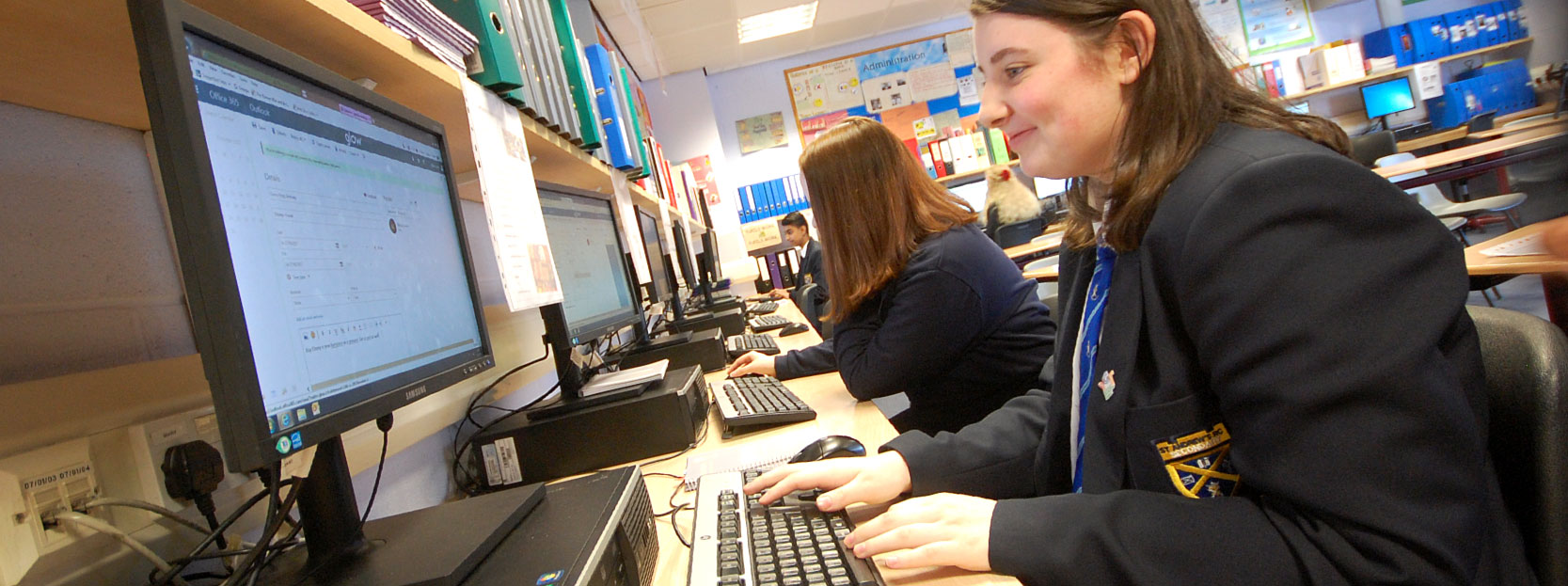
Computing Science
The Computing Science Department offers a variety of qualifications, vocational and academic, to prepare young people for the world of work and the continuously-developing Computing Science industry.
We offer:
- BGE (S1-S3) courses
- National 5, Higher and Advanced Higher Computing Science
- NPA Games Development
- NPA Cyber Security
- NPA Digital Media.
BGE students develop their digital skills by experimenting with Scratch coding, and making pixel art while learning about basic computing concepts.
BGE also uses micro.bit and Sphero products to enhance learning.
National 5 Computing Science
N5 Computing Science builds on the skills gained in BGE Computing courses.
The course is split into 3 main areas:
- 2 mandatory units:
- Computer Systems (mandatory unit) (CS)
- Software Design and Development (mandatory unit) (SDD)
- and one of:
- Database Design and Development (DDD)
- Web Design and Development (WDD)
CS covers how a computer works. Pupils learn about the different parts of the computer e.g. graphics card, and how these parts interact with eavh other, e.g the control bus. Pupils also learn how to use binary, and how computers can be used intelligently in a number of settings.
SDD covers coding in Python. Pupils learn to make programs using a variety of algorithms and techniques based on a given specification. Pupils also learn about the Software Development Cycle.
DDD covers database work in Microsoft Access. Pupils learn to work with databases using SQL (Structured Query Language) to create, edit and delete records. Pupils also learn how to plan databases and tailor them to certain situations using entity-relationship diagrams and functional/end-user requirements.
WDD covers website creation using HTML, JavaScript and CSS. Pupils learn how to design websites using low-fidelity prototyping. They will also be able to tailor them to requirements set by the end user and a given specification.
The course is assessed using an in-class assignment involving the Design and Development units (1/3 of overall course, 40 marks) and an external assessment set by Qualifications Scotland (2/3 of overall course, 80 marks).
Higher Computing Science
N5 Computing Science builds on the skills gained in the N5 Computing course.
Like N5, the course is split into 3 main areas:
- 2 mandatory units:
- Computer Systems (mandatory unit) (CS)
- Software Design and Development (mandatory unit) (SDD)
- and one of:
- Database Design and Development (DDD)
- Web Design and Development (WDD)
CS covers how a computer works. Pupils build on their N5 knowledge by learning to use more complicated binary (negative numbers) and gaining a deeper understanding of the inner workings of a computer and its components.
SDD covers coding in Python. Pupils build on their N5 knowledge by gaining a deeper understanding of Python and its functions. Pupils learn more algorithms and mathematical operands like modulus (%).
DDD covers database work in Microsoft Access. Pupils build on their N5 knowledge by using databases with more than 2 tables, and learning to plan more effectively through the use of entitry-occurrence diagrams. Pupils also learn aggregate functions and associated syntax in SQL, like AVG() and GROUP BY.
WDD covers website creation using HTML, JavaScript and CSS. Pupils build on their knowledge from N5 by learning new styles in CSS and new functions in JavaScript to improve the usability and scope of their websites.
The course is assessed using an in-class assignment involving the Design and Development units (1/3 of overall course, 40 marks) and an external assessment set by Qualifications Scotland (2/3 of overall course, 80 marks).
Advanced Higher Computing Science
Advanced Higher Computing Science builds on the skills gained in National and Higher Computing courses, while introducing more pupil-led learning.
The course is split into 3 main areas:
- 2 mandatory units:
- Computer Systems (mandatory unit) (CS)
- Software Design and Development (mandatory unit) (SDD)
- and one of:
- Database Design and Development (DDD)
- Web Design and Development (WDD)
Pupils will also learn to integrate these areas in their Project/Assignment which is self-led. This is completed throughout the year.
SDD covers coding in Python. Pupils build on their knowledge from Higher by learning about advanced coding constructs like objects, properties, methods, connections to SQL servers and execution of SQL queries outside of a database environment like MS Access.
DDD covers database work in Microsoft Access. Pupils build on their Higher knowledge by learning CREATE and DROP, more logical operators like EXISTS, and learning to use datatypes in queries when creating tables e.g. varchar().
WDD covers website creation using HTML, JavaScript and CSS. Pupils buildon Higher knowledge by learning to use PHP and server-side processing, using advanced HTML form controls, connections to databases with MySQL Improved, and session variables.
The course is assessed using a self-led project involving a combination of 2 units (60% of overall course, 80 marks) and an external assessment set by Qualifications Scotland (40% of overall course, 55 marks).
NPA Games Development
In this course, pupils gain skills required for the computer game industry like working with media, graphics and coding using Godot.
This course is assessed throughout the year using a mix of assessment methods. At Level 4, there is a multiple choice test that assess the knowledge portion of the course. Pupils create a portfolio of their work to be submitted as parts of this course.
NPA Cyber Security
In this course, pupils gain skills required for the cyber security industry. Pupils will learn about data security, digital forensics and ethical hacking.
This course is assessed throughout the year using a mix of assessment methods, formal and informal.
NPA Digital Media
In this course, pupils gain skills relating to digital media. Pupils learn to create and edit different types of digital media, e.g. videos, audio and photos.
This course is assessed throughout the year using a mix of assessment methods, formal and informal. Pupils create a portfolio of their work to be submitted as parts of this course.
